From Brine to Breakthrough: A Decade of Produced Water Evolution and the Path to a Circular Water Economy
By Rajendra Ghimire, PhD, MBA
FIOPO, Managing Partner| Produced Water Society, VP
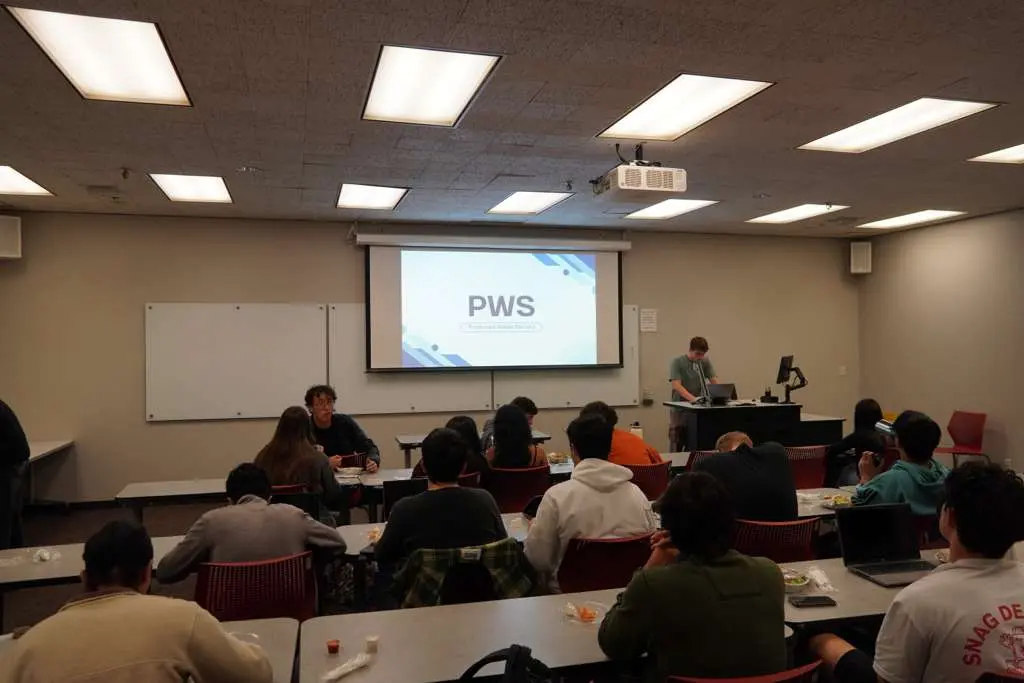
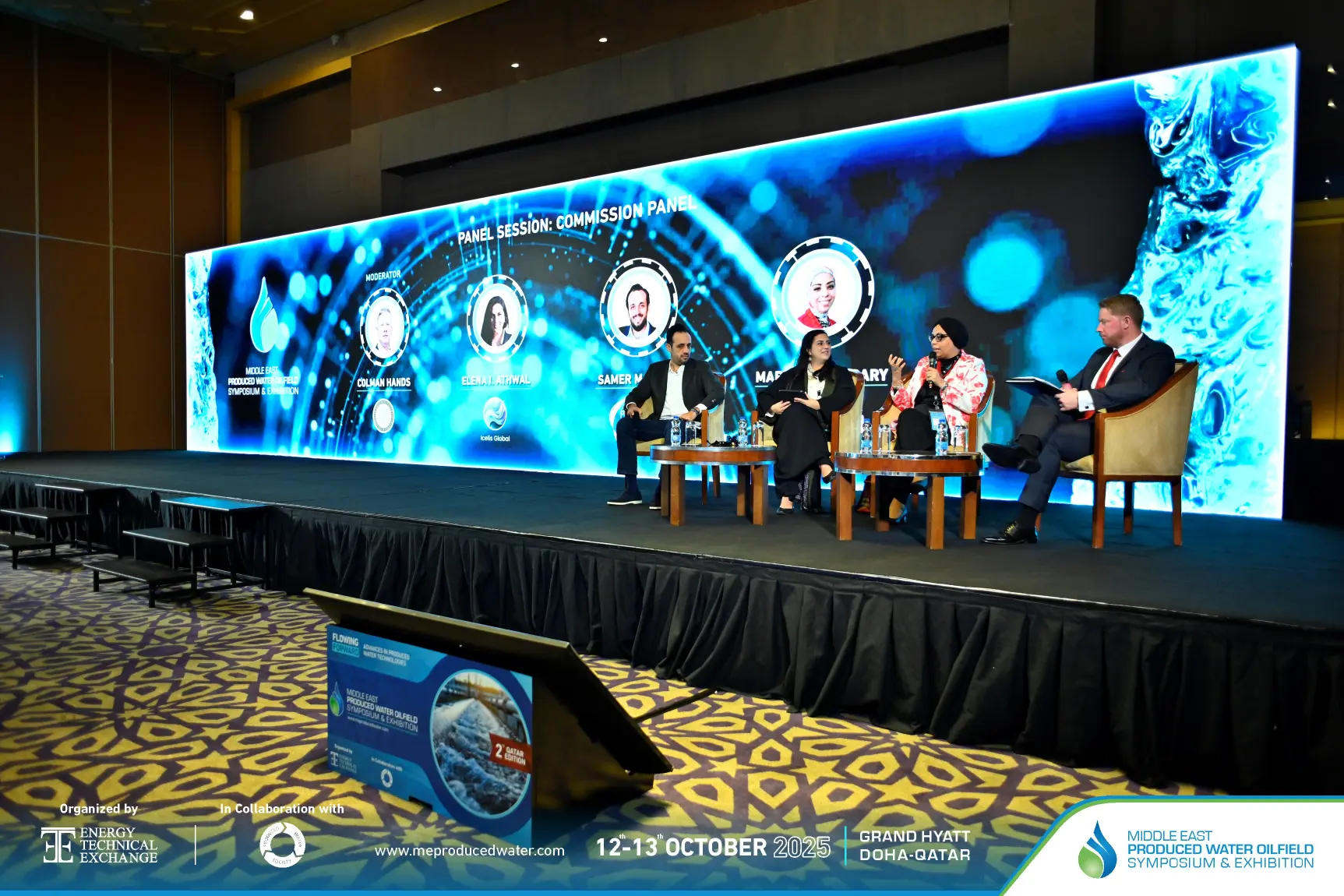
When I walked into my first Produced Water Society conference in Houston in 2015, I was newly working in the oil and gas industry. I carried curiosity, ambition, and a growing awareness that water was the quiet force shaping every barrel of oil produced.
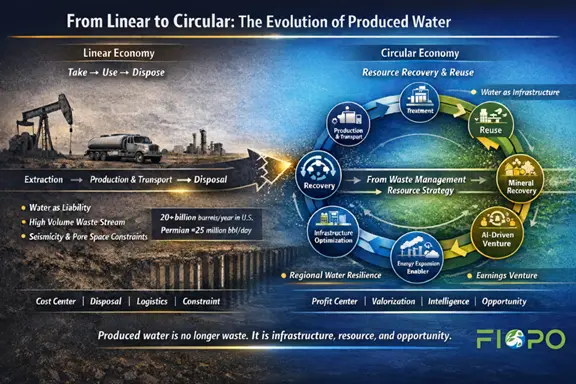
At that time, produced water management followed a linear economic model. Water was brought to the surface, transported by truck or pipeline, and injected underground for disposal. The system was straightforward and efficient, but it treated water as a liability rather than a resource.
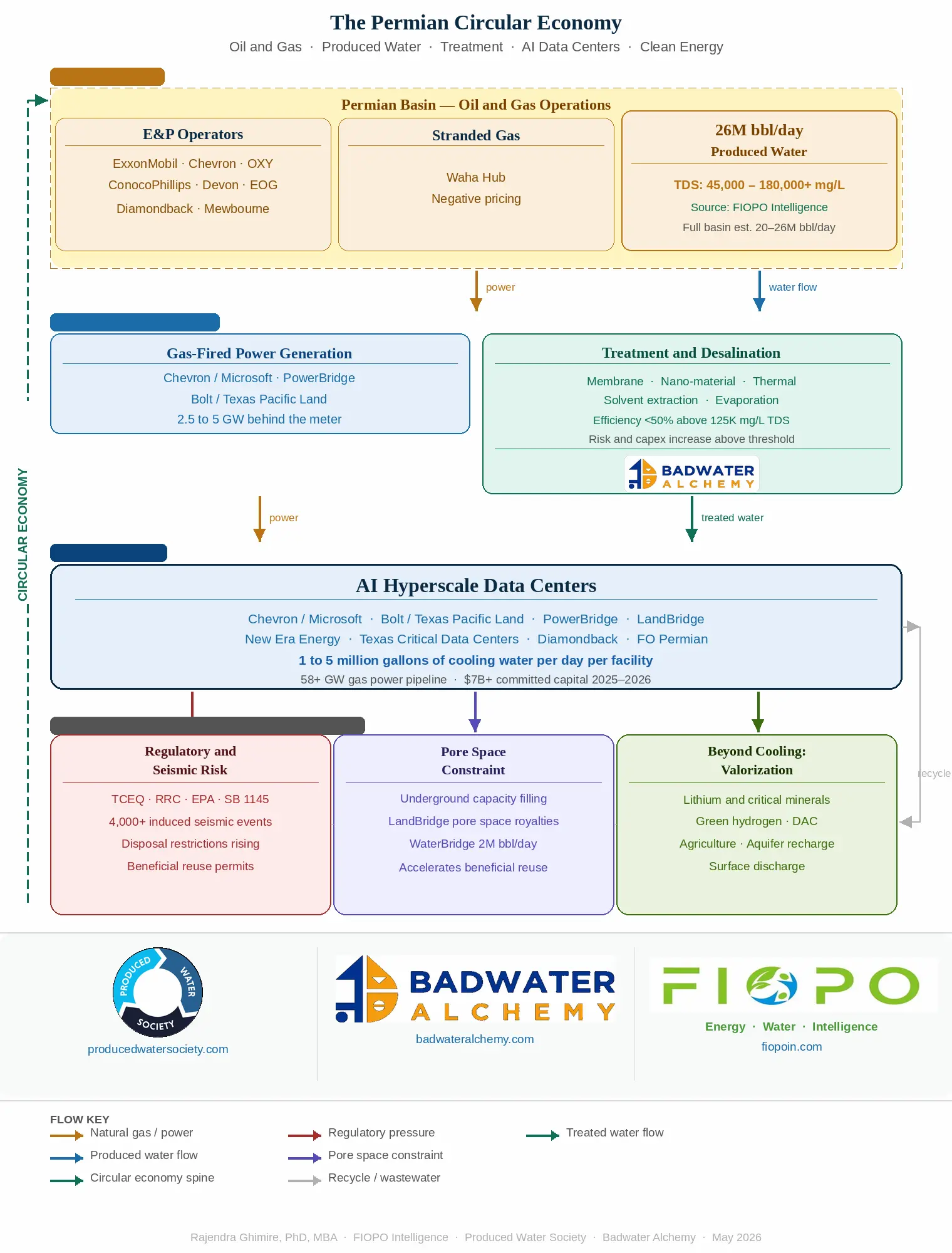
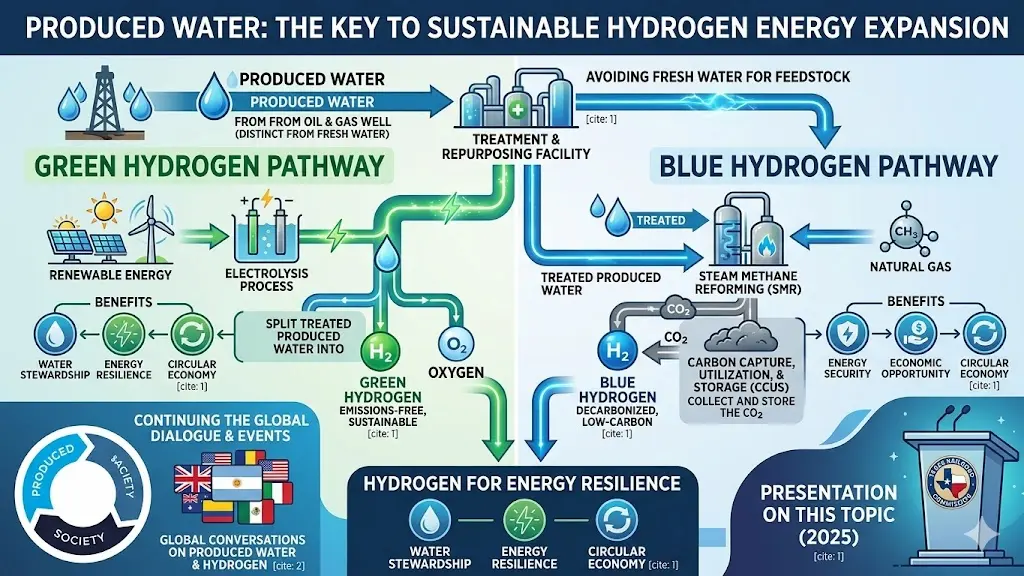
Today that mindset has shifted. What was once a take use dispose model is evolving into a circular water economy built on treatment, reuse, mineral recovery, infrastructure optimization, and beneficial applications beyond the oilfield.
The scale of the challenge explains the urgency. The United States generates more than 20 billion barrels of produced water annually. The Permian Basin alone produces more than 25 million barrels per day. For every barrel of oil produced, several barrels of water accompany it to the surface. These volumes make produced water the largest waste stream associated with energy production in the country.
As volumes increased, so did the pressure on disposal systems. Concerns related to induced seismicity and limitations in available pore space forced operators and regulators to reconsider reliance on deep injection wells. Infrastructure constraints exposed the limits of the linear model.
The industry responded by engineering a pivot.
Recycling for completions became standard practice across many operators. Midstream companies expanded from gathering and disposal into full lifecycle water management systems that integrate recycling, treatment, and transportation.
Select Water Solutions developed extensive recycling networks and recently partnered with LibertyStream Infrastructure to pursue lithium carbonate production from produced water in the Midland Basin. This initiative demonstrates how water infrastructure can become a platform for critical mineral extraction and economic expansion.
Deep Blue Midland Basin built large scale pipelines and treatment systems designed to manage water as a regional infrastructure asset rather than a disposal burden. Integrated gathering and recycling systems now handle millions of barrels per day.
Western Midstream completed the acquisition of Aris Water Solutions in a transaction valued at approximately 1.5 billion dollars. This move significantly expanded water gathering, recycling, transportation, and disposal capabilities across the Delaware Basin and southeastern New Mexico. Consolidation in the sector reflects recognition that water infrastructure is strategic energy infrastructure.
Beyond the oil field, broader partnerships are emerging. Natura Resources and NGL Energy Partners announced collaboration to pair advanced nuclear technologies with large scale produced water desalination. The concept extends water reuse into industrial, data center, and agricultural applications. This is structural transformation.
State level collaboration has also accelerated innovation. The Texas Produced Water Consortium was established to coordinate research, pilot projects, and regulatory pathways for beneficial reuse. The New Mexico Produced Water Research Consortium similarly supports science-based research and practical frameworks for treatment and reuse. These consortiums represent a bridge between academia, regulators, operators, and technology providers.
Artificial intelligence and data platforms now optimize routing, treatment decisions, and reuse strategies in real time. Water management has evolved from logistics to intelligence driven infrastructure planning.
Looking back at that first conference in Houston, I realized that I was witnessing the early stages of a profound shift. Produced water was once managed as an operational inconvenience. Today it is recognized as infrastructure, resource, and opportunity.
The transition from a linear waste model to a circular water economy reflects more than engineering progress. It reflects maturity. It reflects responsibility. It reflects an understanding that energy expansion must coexist with water stewardship.
For the next generation of professionals entering this field, the opportunity is clear. Produced water is no longer an afterthought. It is central to the future of energy expansion, mineral development, and regional water resilience.
The work ahead is complex. The volumes are immense. The infrastructure demands are significant. But the direction is unmistakable.
From brine to breakthrough, the story of produced water is still being written.
References
- Ground Water Protection Council. Produced Water Volumes and Management Practices in the United States. https://www.gwpc.org
- B3 Insight. Permian Basin Produced Water Data and Infrastructure Reports. https://www.b3insight.com
- Select Water Solutions Press Release on LibertyStream Lithium Project. https://investors.selectwater.com
- Western Midstream Partners Announcement of Aris Water Solutions Acquisition. https://investors.westernmidstream.com
- Natura Resources and NGL Energy Partners Produced Water Desalination Collaboration. https://www.prnewswire.com
- Texas Produced Water Consortium. Texas Tech University. https://www.depts.ttu.edu/research/tx-water-consortium
- New Mexico Produced Water Research Consortium. New Mexico State University. https://nmpwrc.nmsu.edu
About FIOPO Intelligence
FIOPO Intelligence provides strategic insights at the intersection of energy, water, and infrastructure.